Digital DNA: The Biological Evolution of Modern Vehicles
The Living Car: How Modern Vehicles Evolved Their Digital Anatomy
Introduction: The Evolution from Mechanical to Digital Life
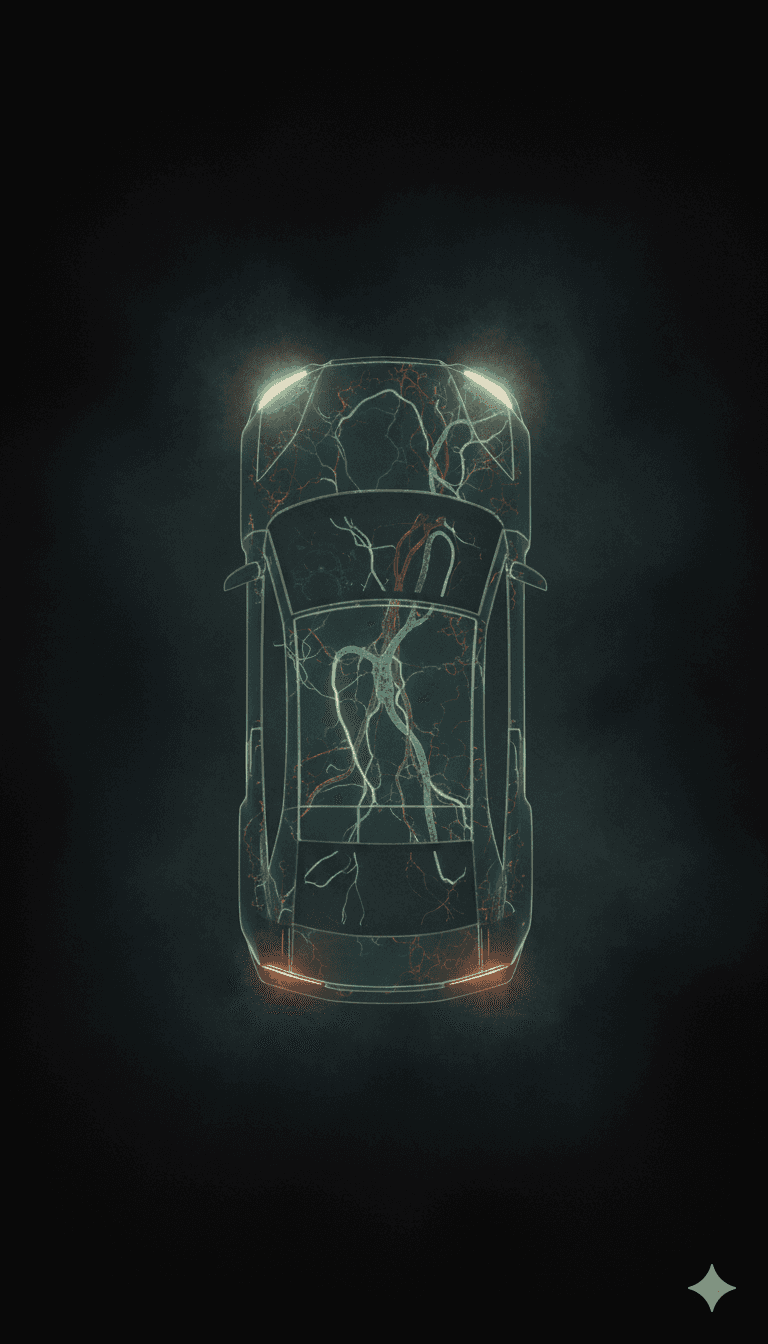
Remember when cars were just about pistons, gears, and mechanical ingenuity? Those days are as distant as the horse and buggy era. Today's vehicles have evolved into sophisticated digital organisms, more akin to rolling supercomputers than traditional automobiles. When you press your car's start button today, you're not just awakening an engine – you're bringing to life a sophisticated digital organism. The quiet hum of your vehicle masks a complex nervous system more powerful than those that guided astronauts to the moon. Modern vehicles have evolved far beyond their mechanical ancestors, developing intricate digital anatomies that coordinate millions of operations every second, much like the human body orchestrates countless biological processes without our conscious thought. Today's cars pack more computing power than the systems that guided Apollo missions to the moon, running millions of lines of code that control everything from your brakes to your favourite playlist.
The Digital Anatomy of Modern Vehicles
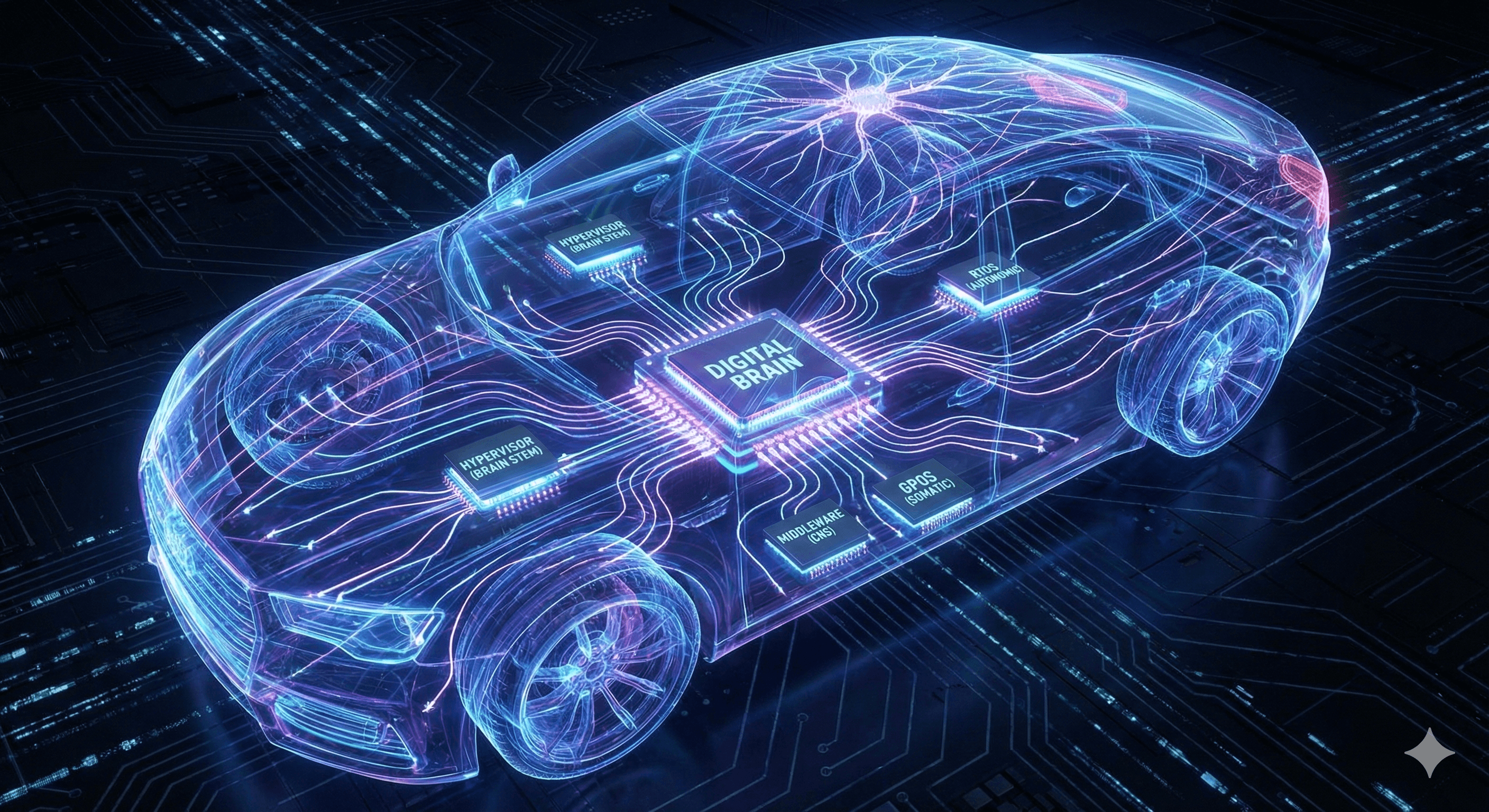
Just as our bodies are organized into sophisticated systems working in harmony, today's vehicles operate through an intricate hierarchy of digital systems. Understanding this digital anatomy helps us appreciate how far automotive technology has come – and where it's heading.
The Brain: System Architecture Overview
Technical Definition:
Automotive system architecture refers to the hierarchical organization of computing systems, networks, and software that control vehicle operations. This architecture follows a layered approach, with each layer handling specific functions while communicating with others through standardized interfaces.
Biological Analogy:
Think of this architecture as the human brain's structure. Just as our brain has distinct regions for different functions – like the frontal lobe for decision-making and the cerebellum for motor control – modern vehicles have specialized systems for different operations.
How It Works:
Modern vehicle architecture typically consists of:
1. Hardware Layer (Brain Structure)
- Multiple Electronic Control Units (ECUs)
- Sensors and actuators
- Communication networks (CAN, LIN, FlexRay)
2. Software Layer (Brain Function)
- Hypervisor
- Operating systems
- Middleware
- Applications
Manufacturer Implementations:
- Tesla: Centralized computing architecture with fewer, more powerful ECUs
- Traditional OEMs (BMW, Mercedes): Distributed architecture with multiple specialized ECUs
- Volkswagen: Moving toward a unified computer architecture with their CARIAD platform
Benefits and Challenges:
Benefits:
- Improved functionality and feature integration
- Better resource utilization
- Enhanced updatability
Challenges:
- Increased complexity
- Cybersecurity concerns
- Integration of legacy systems
The Brain Stem: Hypervisor Technology
Technical Definition:
A hypervisor is a virtualization platform that creates and manages virtual machines (VMs), allowing multiple operating systems to run concurrently on shared hardware while maintaining isolation between critical and non-critical functions.
Biological Analogy:
At the top of this hierarchy sits the hypervisor – the vehicle's brain stem. Like how our brain stem controls vital functions and manages the flow of information between the brain and body, the hypervisor orchestrates the car's critical computing resources. Think of it as the master controller that keeps different systems isolated yet coordinated. Just as your brain's language centre doesn't interfere with your heartbeat, the hypervisor ensures that a glitch in your car's entertainment system can't affect crucial safety functions like braking or steering. It creates secure, isolated spaces within the car's computing system – similar to how our brain segregates different functions into specialized regions while maintaining overall coordination.
How It Works:
Type 1 Hypervisors (Bare Metal):
- Run directly on hardware
- Example: QNX Hypervisor
- Used for critical safety systems
Type 2 Hypervisors (Hosted):
- Run on top of an operating system
- Example: VMware
- Used for less critical applications
Detailed Architecture:
Just as our bodies are organized into sophisticated systems working in harmony, today's vehicles operate through an intricate hierarchy of digital systems. Understanding this digital anatomy helps us appreciate how far automotive technology has come – and where it's heading.